



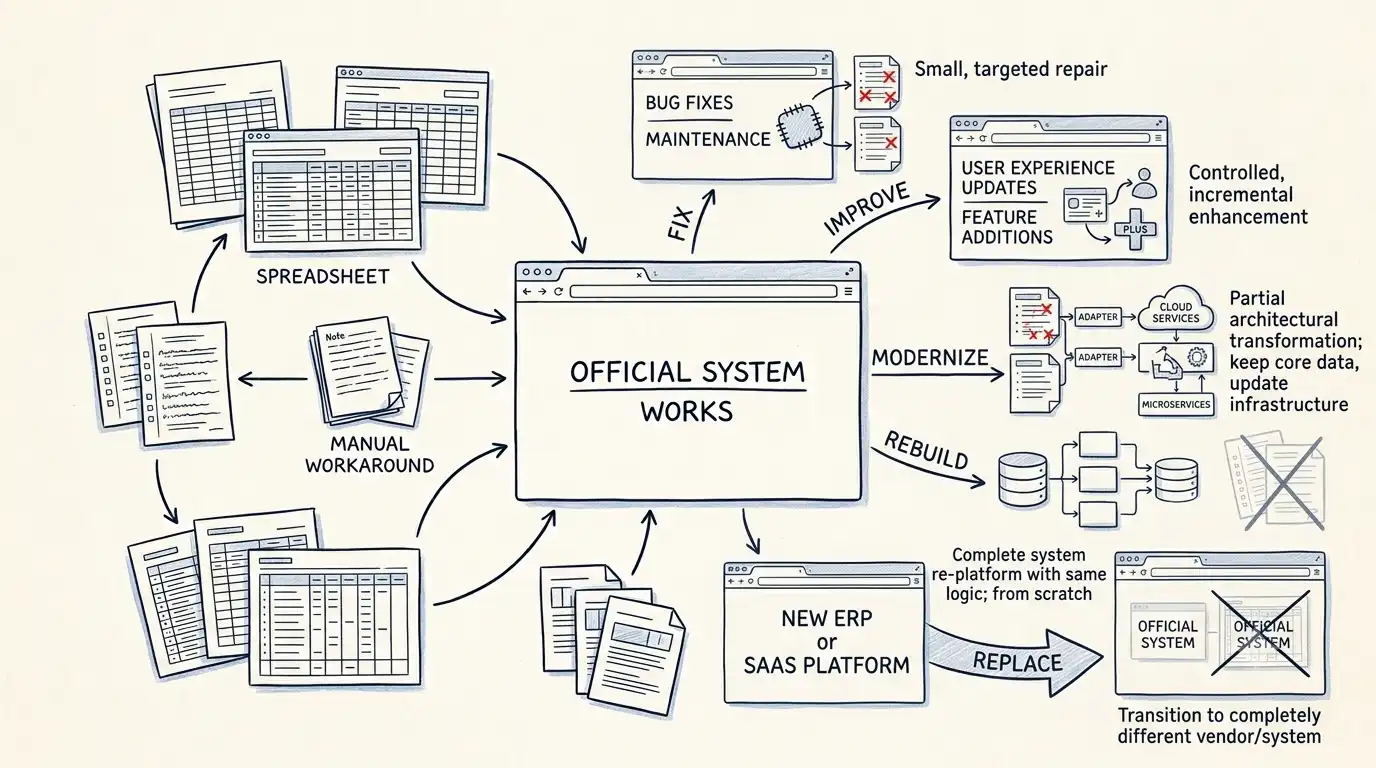
When an existing system becomes difficult to work with, there are usually three choices: fix it, rebuild it or replace it. Choosing correctly can save months of unnecessary work.
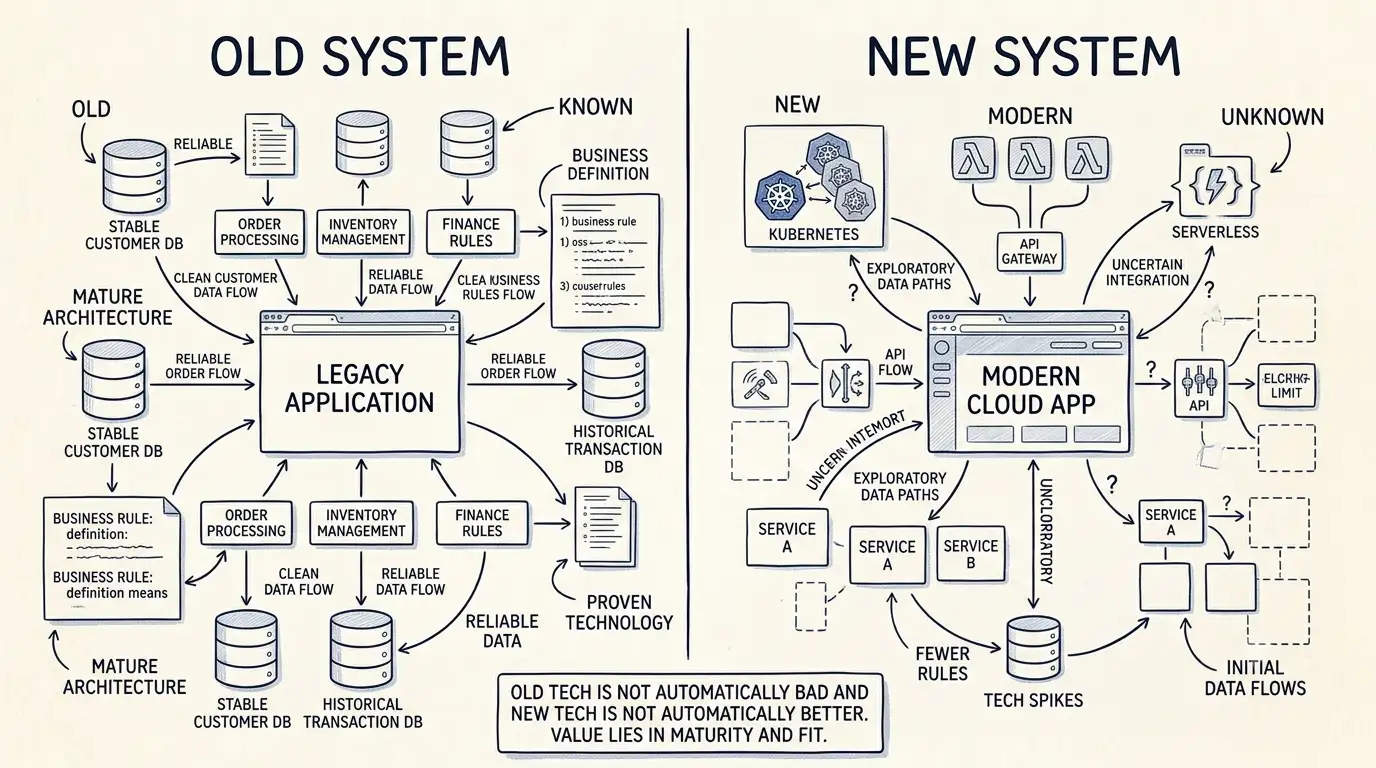
Calling software "legacy" tells you almost nothing about whether it should be replaced. Some old systems are reliable, valuable and worth keeping.
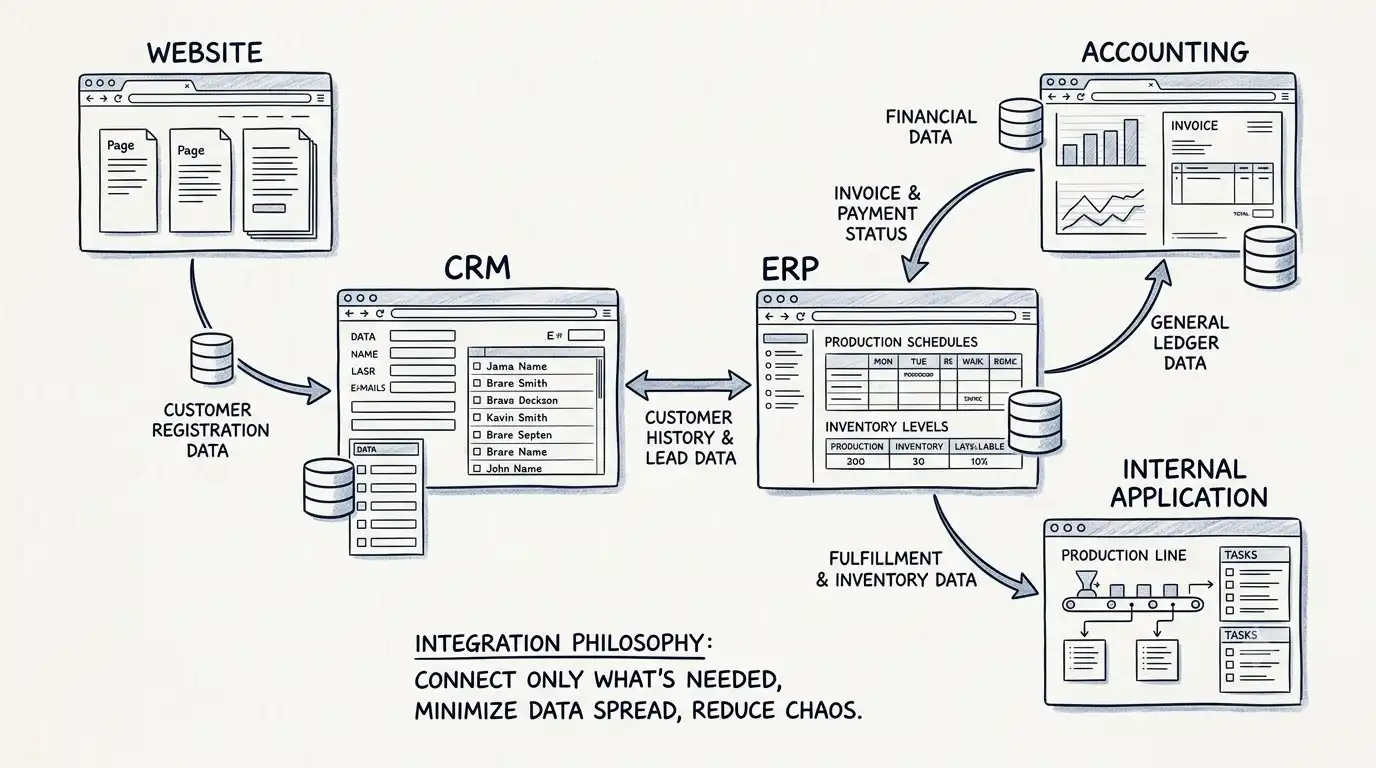
Businesses often approach integrations as a technical problem. The more important question is which information actually needs to move between systems, when and why.
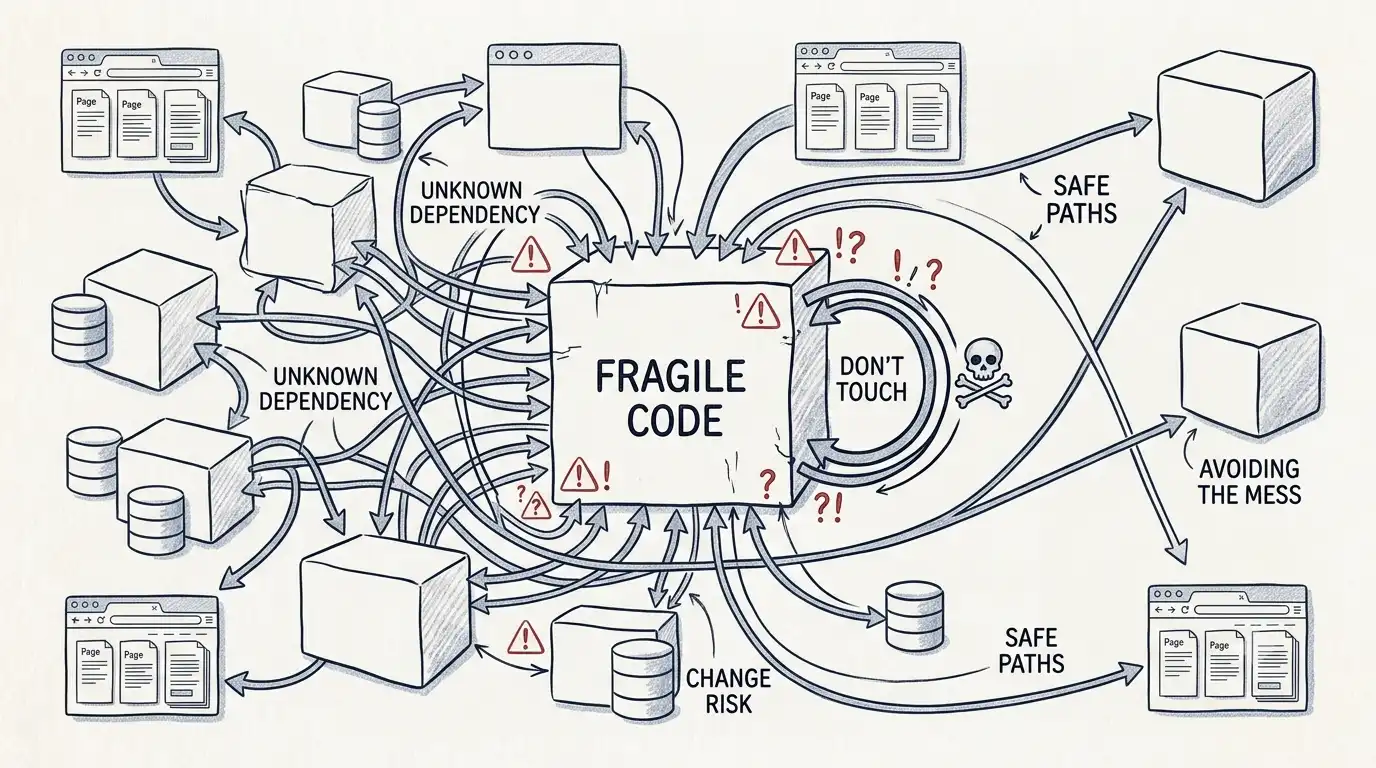
One of the clearest signs that software needs attention is when experienced developers become afraid to change it. Fear of change usually means the system has accumulated too much uncertainty.
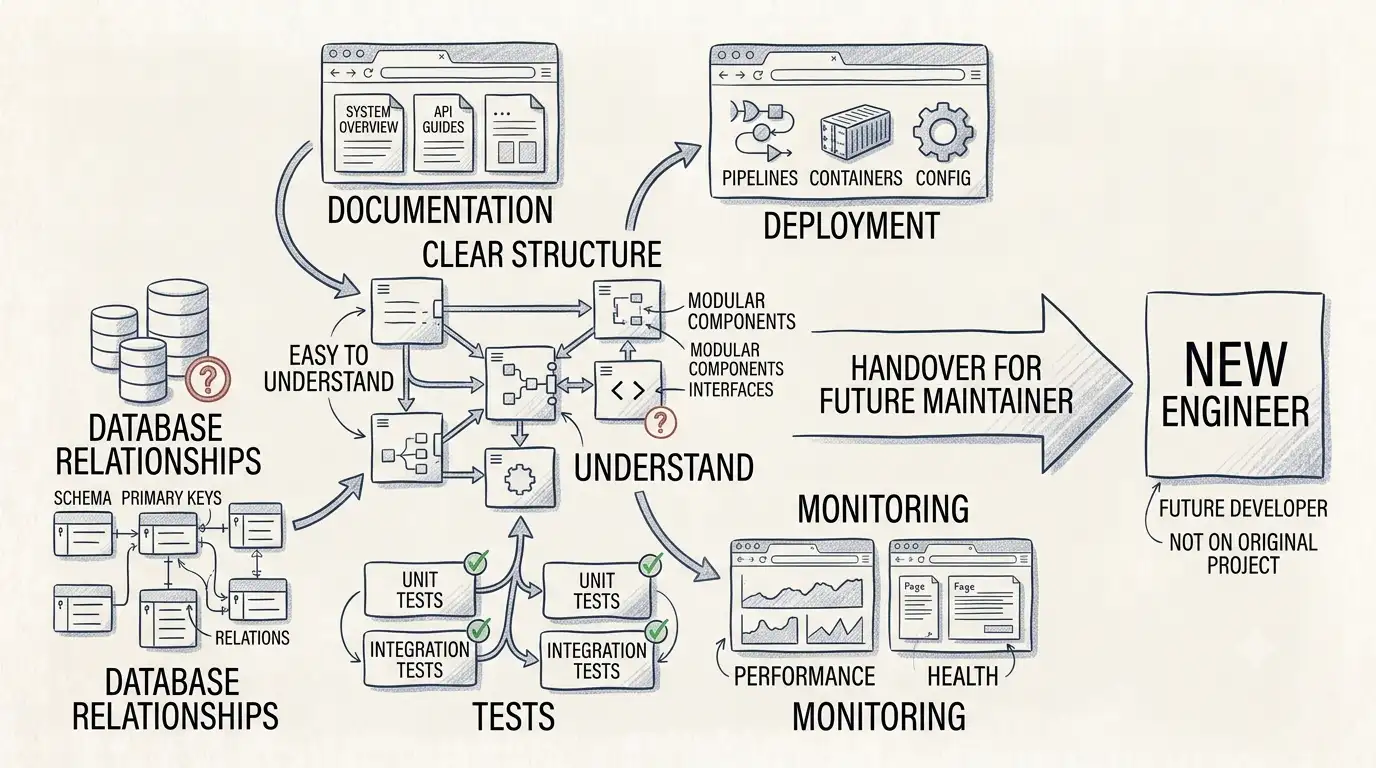
The person who builds software today may not be the person maintaining it two years later. Good systems are built so someone else can understand and safely change them.
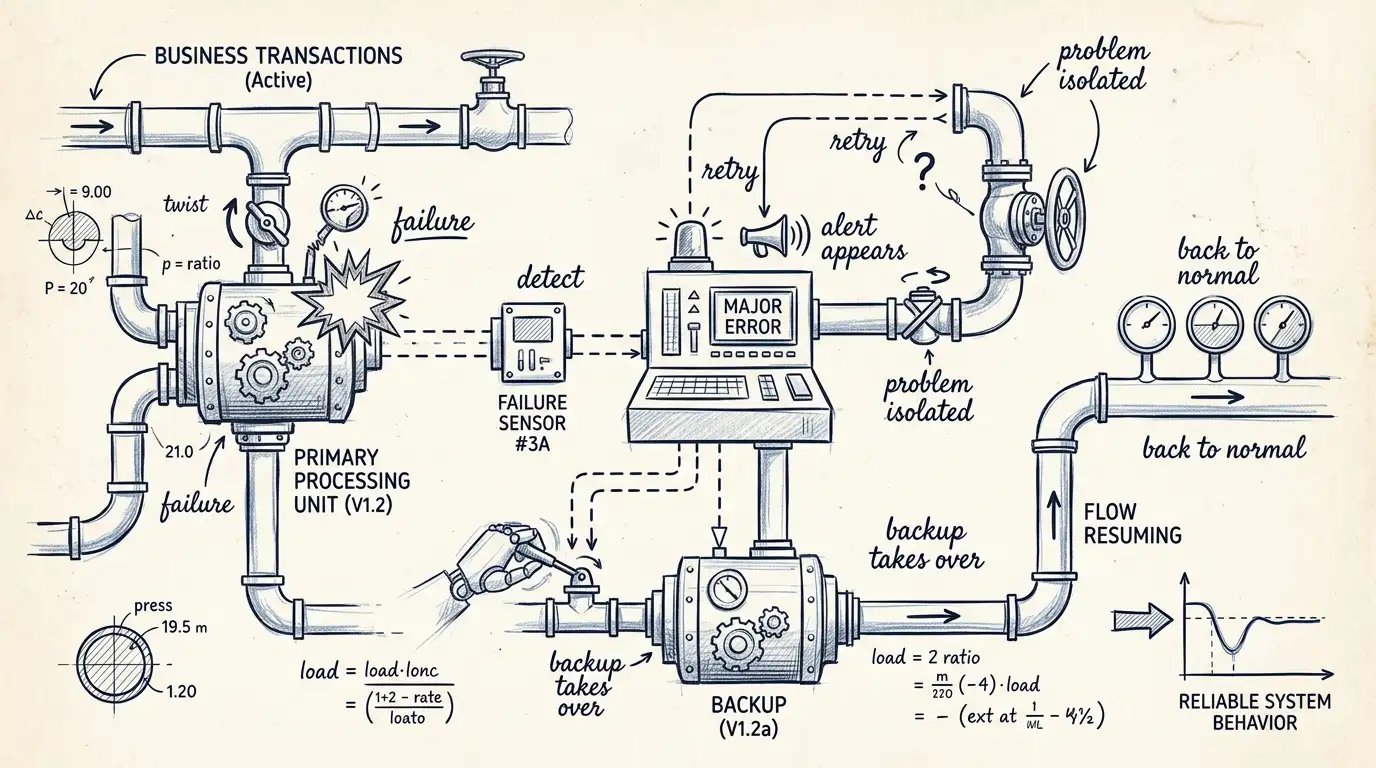
Anyone can design a system for the happy path. Reliable software is designed for failed payments, missing data, unavailable services, accidental clicks and unexpected situations.
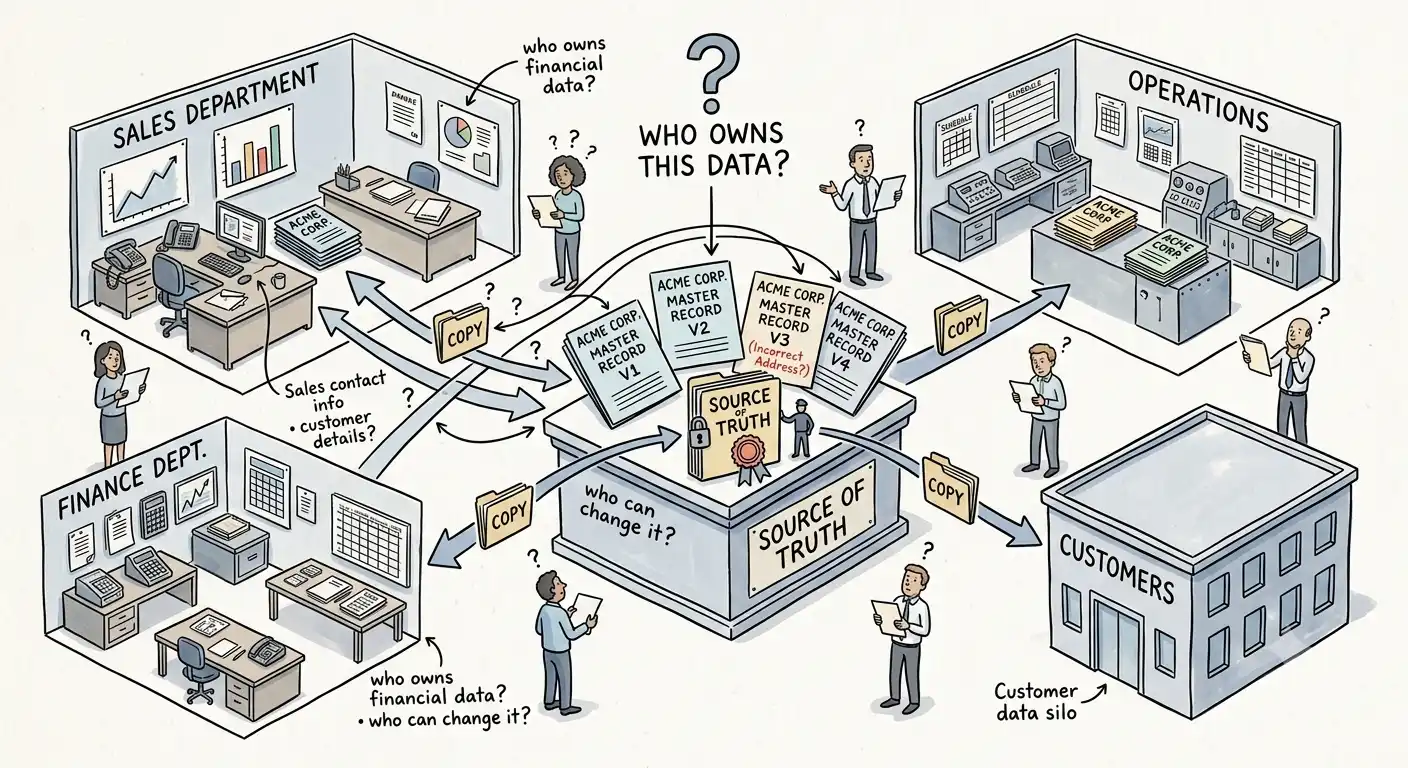
Many software problems are really data ownership problems. If nobody knows which system or person is responsible for a piece of information, software will eventually reflect that confusion.
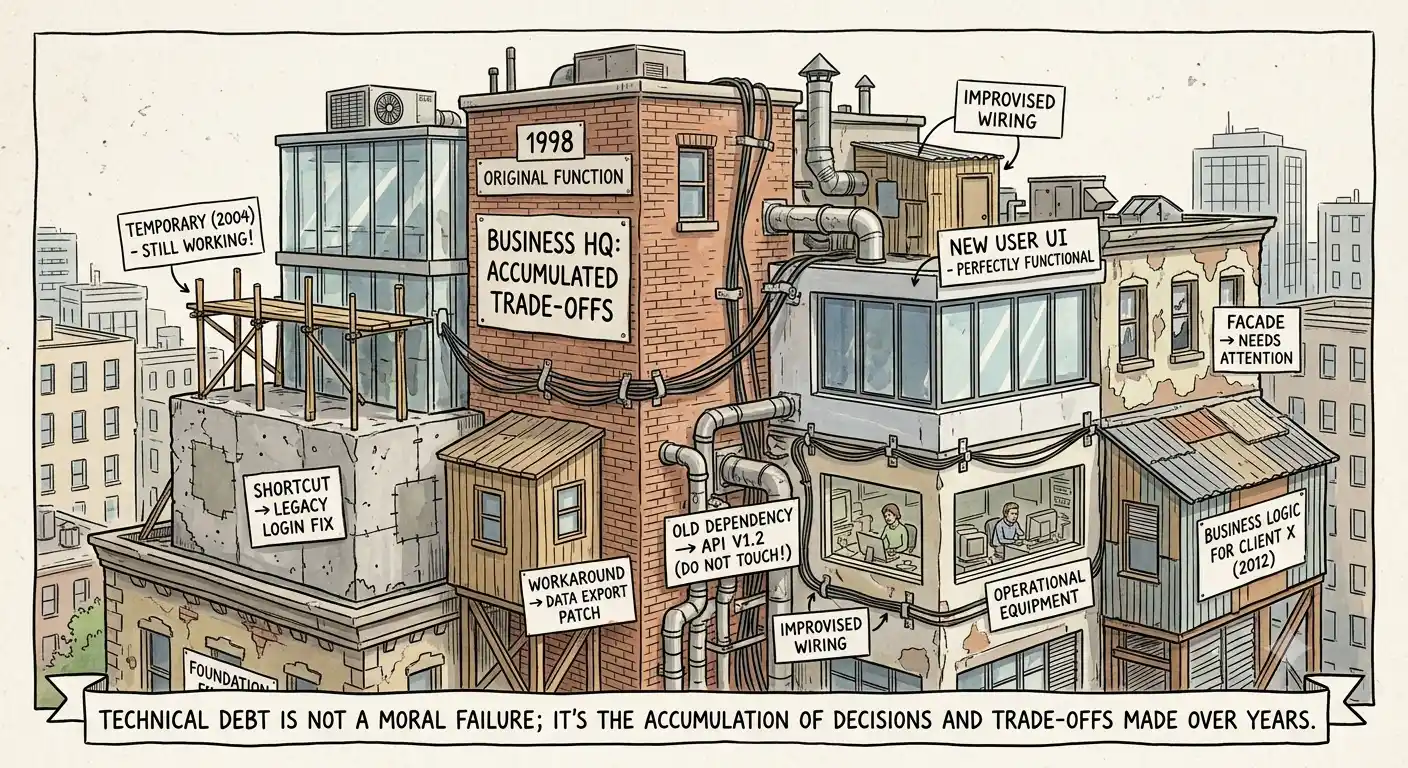
Every business accumulates shortcuts. The problem isn't having technical debt. The problem is allowing important debt to grow without understanding its cost.
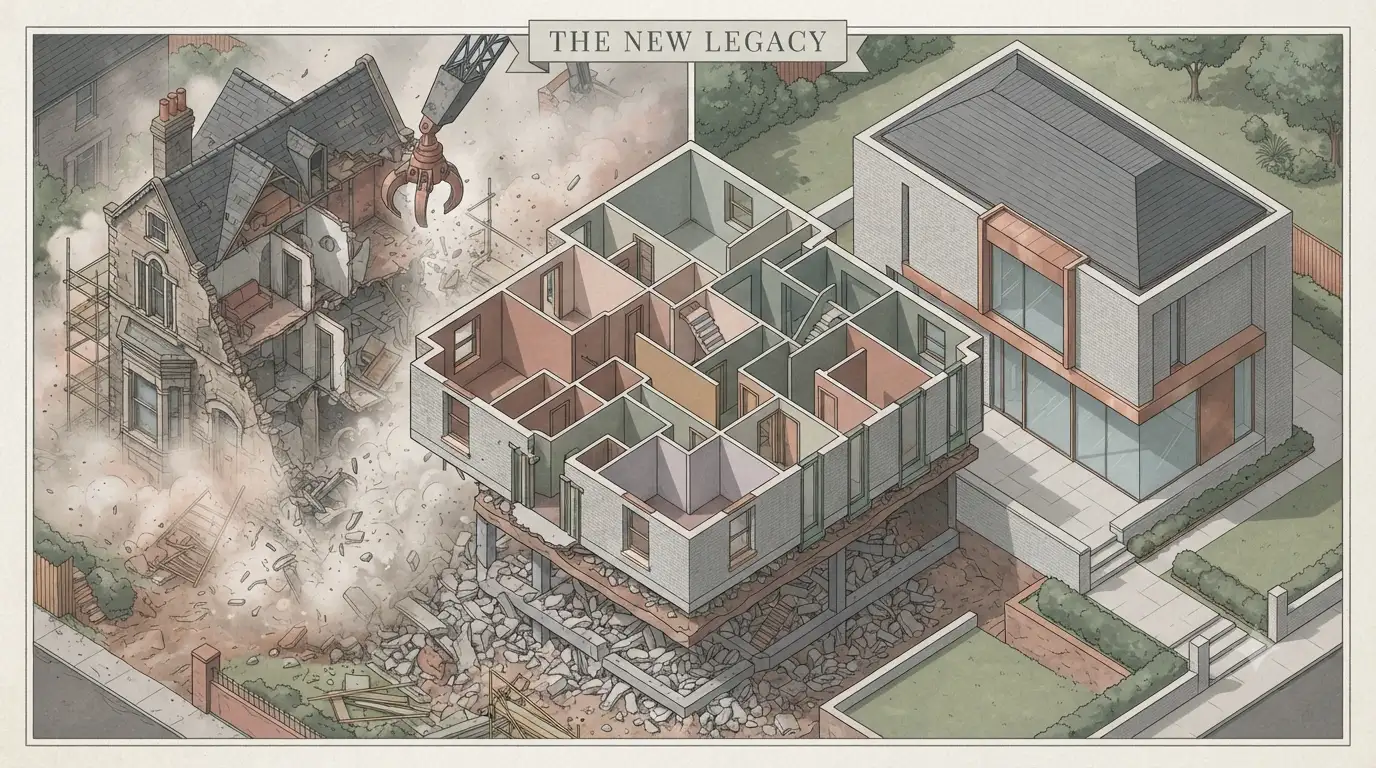
A clean new codebase can feel like freedom. But a rewrite can also erase years of business knowledge if the old system isn't understood first.